Skip to search boxSkip to navigationSkip to main content

REFLACT

REFLACT stands for reflection and action. The research group REFLACT addresses the role of the digital in new ways of organising and governing resources. We emphasise digitalisation as a way of collective becoming: an approach that understands and co-creates change in a reflective and responsible way in the human-technology ecosystems and infrastructures. 

We focus on people operating in these systems in different roles, such as, user groups, employees, citizens, and networks of stakeholders. We work with a broader spectrum of human values in addition to generating business values, and how these values interplay with digital technologies.

We conduct our research through both a reflective approach that utilises participatory and field-based methods (including digital trace data), and a proactive approach that utilises design methods as instruments to engage industry and society.

In our research, we work with real-world projects and initiatives to study, intervene and create an agenda for change and innovation in human-technology ecosystems. Currently, we are working on projects that address the role of the digital in (ordered alphabetically):

  • Collective governance in decentralized ecosystems
  • Democratic business and cooperative organisations
  • Digital platforms and vulnerability to crime
  • Global movements such as green transition and open data
  • Organising and governing data commons
  • Organizational resilience in global unrests such as pandemic
  • Refugee and mobilisation
reflactevent

Contact Information

Contact person

Visiting address

  • 3D, RLV
  • Denmark

Events

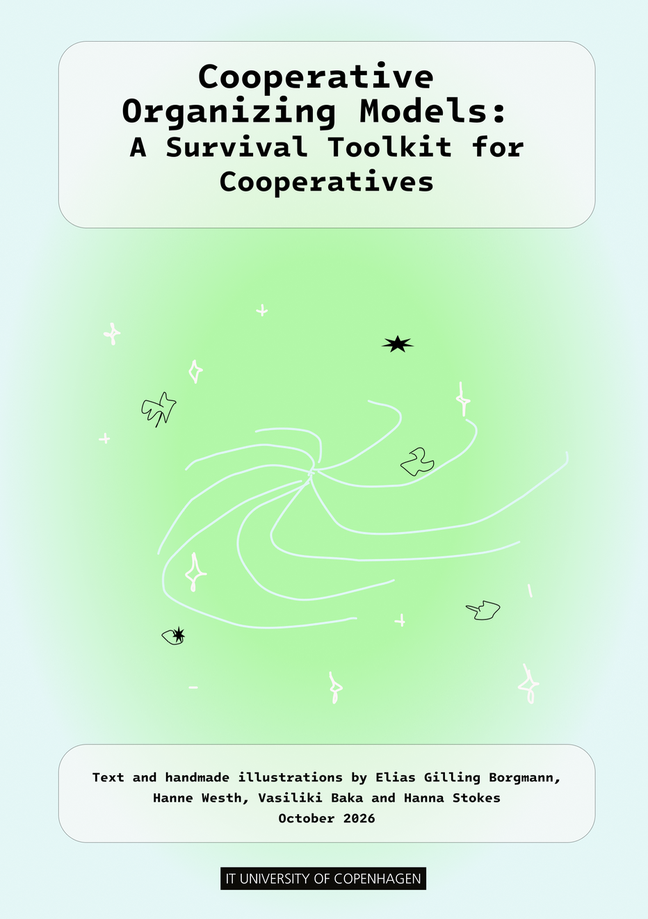
Access to the e-booklet

Worksheets

Please find the link below to secure participation. 

Erfaringsudveksling og forskning!

Kom og vær med!

Du er hermed inviteret til to workshops for små og mellemstore kooperativer. 

Det er en anledning til at arbejde med organisering og de udfordringer der er, på en måde der giver mening for jer og på en måde der giver erfaringsudveksling mellem deltagerne.

Samtidig samler vi ny data om kooperative måder at tænke på, tilgange og løsninger. Vi samler det sammen, skriver om det og udvider den fælles værktøjskasse. Vores arbejde her på ITU består også i at arbejde for en bedre forståelse af kooperativer i teori og praksis, herunder kooperativers rolle i samfundet.

Vi ved at digitale værktøjer er en udfordring i mange kooperativer. Meget freeware er fra techgiganter, hvilket mange forsøger at undgå, der er også udfordringer med at arbejde i de samme systemer og formater og give den frihed, som nogle ønsker der skal være. Så hvordan håndterer I og hvordan håndterer andre kooperativer digitale udfordringer? Det er vi optaget af.

Onsdag 25 november 2026 - på IT-Universitetet i København

kl.10-15.30: Workshop 1: Modeller for Kooperativ Organisering

Kom og prøv vores nye modeller for værdiafklaring og jeres kooperative eksistensgrundlag.

Vi leder dig gennem modellerne og du får lov at arbejde med modellerne i forhold til dit kooperativ, så du kan blive endnu mere skarp på hvad der giver mening og hvad der er vigtigt i jeres kooperativ og den måde I arbejder på.

Inkl. Frokost

15.30-16.30 Kaffehygge

kl.16.30-20.00 Workshop 2: Digitale værktøjer i kooperativer

Kom og deltag i en diskussion om digitale værktøjer med fokus på udfordringer, tilgange og løsninger. Vi har prøvet sådanne workshops før og ved at når vi sætter os sammen, så kommer der til at ske noget godt.

Der serveres lidt mad undervejs.

PS – du er velkommen til at deltage i en eller begge workshops – bare husk at melde dig til det du vil deltage i – og tag gerne en kollega med. (se linket på forsiden)

Skriv gerne til Hanne Westh ([email protected]) en af forskerne fra projektet om organisering i kooperativer på ITU. 

Click here to submit your participation!


News


Announcing the Action Research Booklet by REFLACT!


We’re excited to announce the release of the Action Research Booklet by REFLACT, now available in print and online!

This booklet constitutes our first joint publication as a research group, combining our experiences and insights into a practical guide for anyone interested in Action Research.

Why Action Research?

REFLACT stands for “Reflect” and “Act”. We combine reflective, participatory methods with proactive, action-oriented research. This approach allows us to engage deeply with real-world issues, in a bid to engage both industry and society in action on them.

What’s Inside?

The Booklet introduces Action Research as a range of interventionist research methods, while specifically focusing on its use on digital technologies. It shares our research experiences, showing how these methods can be applied in various organizational and societal contexts. Designed to be adaptable and evolving, each section can be used as a standalone reading, making the booklet a living document that can grow as new insights emerge.

Who Should Read It?

Whether you’re a student, an academic, or a practitioner, this booklet is for you. It offers a hands-on introduction to Action Research methods, provides key references, and illustrates these approaches with real-life examples. For those already familiar with Action Research, it offers insights into the challenges and successes of using these methods in new and diverse contexts.

Get Your Copy!

The booklet is available to read for free online here. You can also get it in print for free at the IT University of Copenhagen until the 30th of October 2024!

To get your copy, just go to the address of ITU at Rued Langgards Vej 7, 2400 Copenhagen S, and ask for the booklet at the reception!

We sincerely hope you will find the booklet useful for your own purposes and we warmly invite you to contribute with your reflections on it. You can always contact the editors Cancan Wang ([email protected]) or Laura Juncker-Jensen ([email protected]) to share your thoughts!

Happy reading!

Research


Reflact is a melting pot that connects social sciences and humanities, computer science and design within ITU. 

We are also connecting other international research communities such as  

  • Organization studies  
  • Digital government 
  • ICT4D  
  • Codesign  
  • Critical management  

We have strong connections and partnership with change agents in our society 

  • Government organisations  
  • Organizations in key societal sectors such as public health and finance 
  • Cooperative organizations 
  • Humanitarian groups

Our publication covers a wide range of thematic, interdisciplinary journals including: 

  • Computer Supported Cooperative Work  
  • Corporate Reputation Review 
  • Creativity and Innovation Management 
  • Government Information Quarterly 
  • Information Systems Frontiers 
  • International Journal of Human-Computer Studies 
  • Journal of Intercultural Communication 
  • Journal of Usability Studies 
  • Medical Anthropology 
  • Research Policy 
  • Valuation Studies
  • Other area focused journals
  • Catalyst: Feminism, Theory, Technoscience
  • Cross-cultural Research
  • Curation: The Museum Journal
  • Informatics
  • International Journal of Medical Informatics
  • Nordic Journal of Law and Social Research
  • Strategic Design Research Journal
  • Tourism Management 
  • Transforming Government

Teaching and courses

We have been active in all of our three programmes, and we have a teaching portfolio that is coherent with our research profile.
Here is a list of the courses that our faculty in Reflact are currently contributing to: 

Database Use and Design (GBI) 

Digital Platforms (GBI) 

Enterprise Systems and Information Management (GBI) 

Global project management (GBI)  

IT, Globalization and Culture (GBI) 

IT Governance and Quality Management (GBI) 

IT Work and Design (GBI) 

Organisational Change (DIM) 

Introduction to Service Design (DIM) 

Service Design – management and implementation (DIM) 

Organization and Innovation (ILM) 

Currently, our research group member Lars Rune Christensen also manages the Executive Master Programme in IT Leadership.
And Sisse Finken manages the PhD school at the IT University of Copenhagen. 


External affiliations

Carsten Østerlund
Professor & Associate Dean for Research at the School of Information Studies, Syracuse University
Research Topics: AI & future of work, Trace methods, Medical informatics, Distributed & virtual work, Organizational learning, Knowledge management

Sébastien Brossard
Visiting PhD
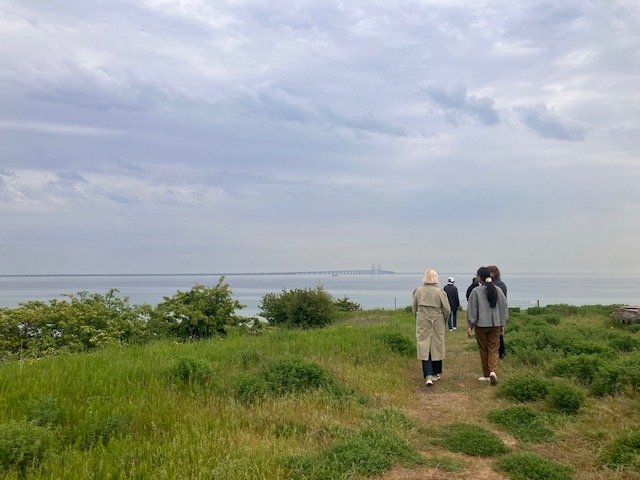
Image gallery

  • reflecttest